Serums, creams and scalp care
- Typical source
- Plant, milk or human cell culture
- The claim you’ll see
- “Contains exosomes,” often with a count per bottle.
- What a study checks
Exosome characterization for skincare, wellness and supplements
The Exosome Group designs and manages exosome characterization studies for any product that claims exosomes: skincare, wellness and supplement brands, and the ingredient suppliers behind them. Every measurement runs at an independent laboratory we name before work starts, and the results come back in a report your R&D, regulatory and claims teams can use.
Where they show up
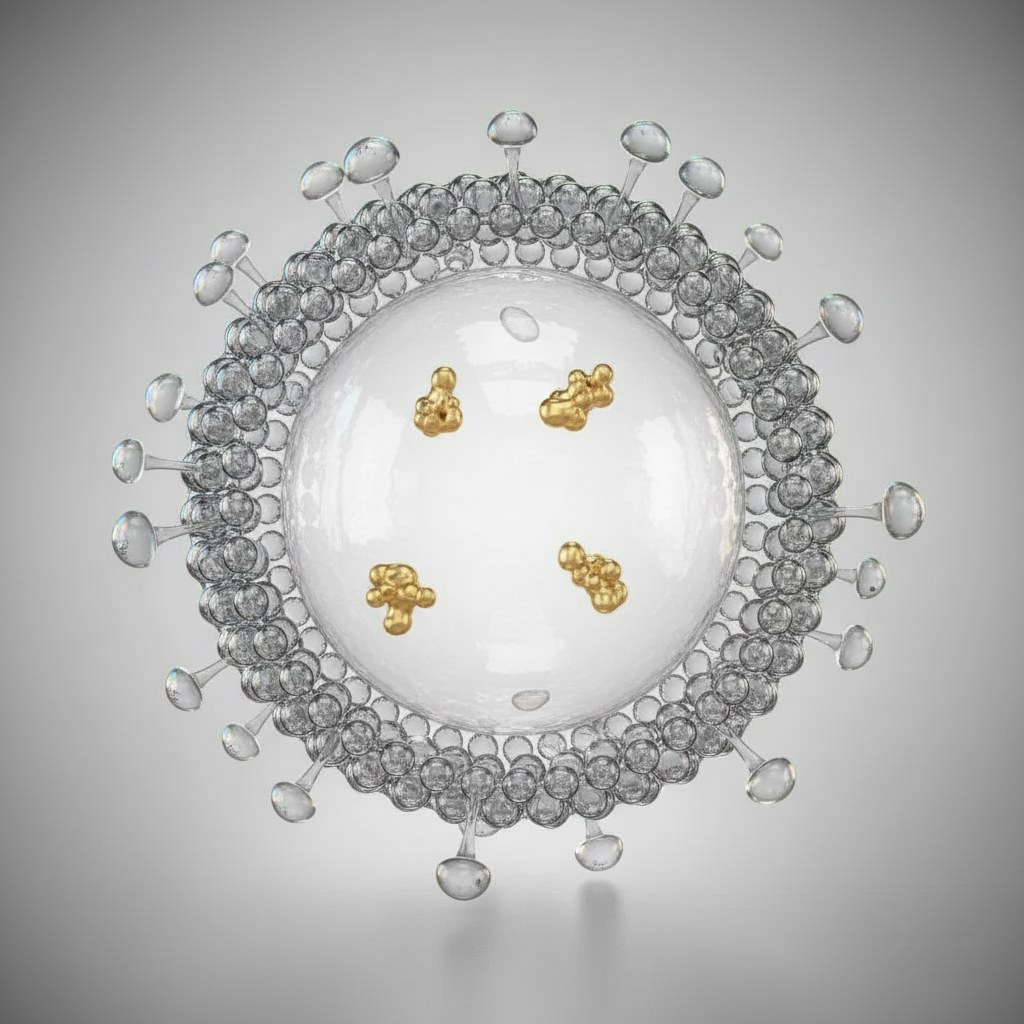
Exosomes are tiny vesicles that cells release to carry proteins and RNA to other cells. That signaling role is why research studies them for skin, hair and gut health, and why they now appear on labels. The claim changes with the product, and so does the study.
What we measure
The methods follow MISEV2023, the field’s guidance from the International Society for Extracellular Vesicles, and are chosen for where your vesicles come from.
How many particles of what size are in the sample.
Whether intact, membrane-bound vesicles are present.
Whether the particles carry proteins expected for vesicles from that source.
How much of the preparation is something other than vesicles.
Whether vesicles can be recovered and measured in the finished product.
Whether the numbers hold from lot to lot and over shelf life.
Independent by design
No ingredients, no instruments, no manufacturing. Every study is designed and reported by a PhD analytical chemist whose peer-reviewed research is on isolating and characterizing extracellular vesicles.
The deliverable
Size distribution, mean of three lots with lot-to-lot range
| Marker | Why it’s on the panel | Result |
|---|---|---|
| Tetraspanins CD9, CD63, CD81 | Species-matched antibodies | Detected in all lots |
| Particles per µg protein | Purity estimate | Reported per lot |
| Casein | Milk co-isolate | Low, reported per lot |
What the data supports
A particle concentration and size profile for the raw ingredient, with vesicles shown by electron microscopy and source-matched protein markers, consistent across three lots.
What it doesn’t support
Calling the particles exosomes, since endosomal origin wasn’t shown, or any count in the finished product.
How a study runs
Step 1
We agree the question, the source, the samples and the methods in a written plan and quote.
Step 2
For a finished product, we confirm vesicles can be recovered and measured in your format first.
Step 3
An independent lab, named in the plan, runs the methods on your lots. Lot numbers and dates are recorded.
Step 4
You receive methods, results and the data files, with a plain statement of what the data supports.
Who it’s for
Ingredient selection, recovery from your format, and what survives formulation.
Data behind label and website claims, and answers for retailers and distributors.
Technical data sheets and certificates of analysis your customers can rely on, whether they make serums, powders or capsules.
Lot-to-lot consistency and how the numbers hold over shelf life.
Where to start
$750
Whether vesicles can be recovered and measured from your cream, serum or powder, and how. A study on a finished product usually starts here. Plus the lab’s cost + 15%, capped at $850, quoted before work starts.
$1,500
A written review of every exosome claim on one product, against the data you already have. No samples needed.
From $4,000
Concentration, size, morphology, identity and purity for your ingredient or finished product, across lots, at a named independent lab. Plus a stated lab allowance, quoted per study.
Claim consults and ongoing scientific advisory are on the services page.
How we work
We sell no ingredients, instruments or manufacturing, and we decline work where we would have a stake in the answer. Our founder’s other businesses are named in our disclosures.
Plant, milk, microbial and human-derived vesicles each get the methods and markers that fit their source.
“Exosome” leads our headlines because it is the word on your label. Our reports say “extracellular vesicle” unless the data shows endosomal origin, as MISEV2023 recommends.
You get the data and the report. We issue no seals, badges or “verified by” marks, and claim decisions stay with you.
Notes
Tell us the source, the format and how many lots. We’ll reply with a study plan and a quote.